
Carbon Footprint of Psyllium: Building a More Sustainable Psyllium Supply Chain
As global food, nutraceutical, pharmaceutical, and wellness industries move toward more responsible sourcing, the carbon footprint of psyllium is becoming an increasingly relevant consideration for ingredient buyers.
Psyllium is a plant-based functional ingredient widely used in dietary supplements, digestive health products, gluten-free foods, bakery applications, pharmaceuticals, and nutraceutical formulations. However, like any agricultural ingredient, its environmental footprint is influenced by multiple stages—from cultivation and harvesting to processing, packaging, and transportation.
For global buyers, understanding these stages can help support more responsible and efficient ingredient supply chains.
What Influences the Carbon Footprint of Psyllium?
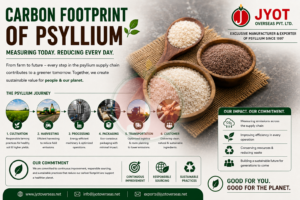
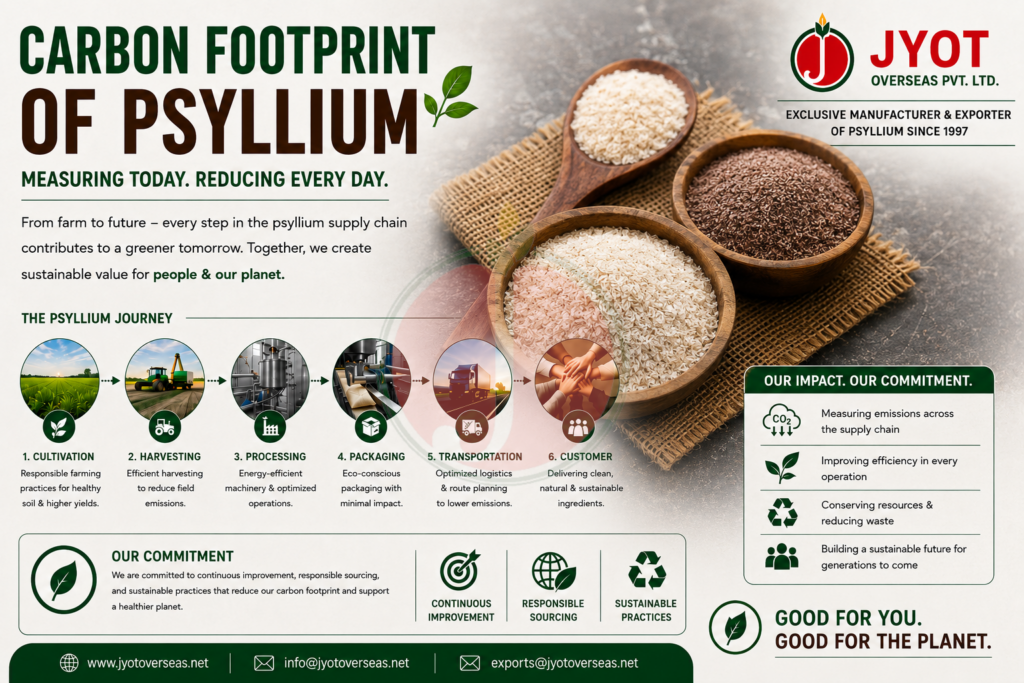
The environmental impact of psyllium does not come from a single stage. It is influenced by the complete supply chain:
Cultivation → Harvesting → Processing → Packaging → Transportation → Customer
Each stage presents opportunities to improve resource efficiency and reduce avoidable environmental impact.
1. Psyllium Cultivation
Agricultural practices are an important part of the overall sustainability profile of psyllium.
Responsible agricultural sourcing, efficient use of resources, appropriate cultivation practices, and better farm-level management can contribute to a more responsible psyllium supply chain.
For psyllium buyers, supplier transparency around agricultural sourcing can therefore become an important part of sustainability evaluation.
2. Harvesting and Raw Material Handling
Efficient harvesting and handling practices can help minimize unnecessary material losses and improve the utilization of agricultural raw material.
Better raw material management also supports consistent quality while reducing avoidable waste throughout the supply chain.
3. Psyllium Processing and Manufacturing
Processing is another important stage when evaluating the carbon footprint of psyllium.
Energy consumption, processing efficiency, equipment utilization, resource management, and waste control can all influence the environmental performance of a psyllium manufacturing operation.
At Jyot Overseas, our focus as an Indian psyllium manufacturer and exporter includes improving operational efficiency, optimizing resource utilization, reducing avoidable waste, and maintaining consistent product quality for international customers.
4. Packaging Efficiency
Packaging contributes to the environmental footprint of any ingredient supply chain.
Efficient packaging selection, material utilization, handling, and shipment planning can help reduce unnecessary material consumption while protecting the product during international transportation.
For bulk psyllium buyers, packaging efficiency can also contribute to better container utilization and overall logistics efficiency.
5. Transportation and Logistics
Transportation is another significant consideration when assessing the carbon footprint of psyllium.
Psyllium supplied from India to international markets may involve multiple logistics stages, including inland transportation, port handling, ocean freight, and final delivery.
Efficient shipment planning, appropriate container utilization, consolidation where practical, and optimized logistics can help reduce avoidable transportation impacts.
Why Sustainable Psyllium Sourcing Matters to Global Buyers
Sustainability is increasingly being evaluated alongside traditional supplier requirements.
Global ingredient buyers may consider:
- Product quality and consistency
- Food safety and manufacturing standards
- Traceability
- Responsible agricultural sourcing
- Supply-chain transparency
- Resource efficiency
- Waste reduction
- Packaging practices
- Logistics efficiency
- Long-term supply reliability
Therefore, sustainable psyllium sourcing is becoming broader than simply purchasing a plant-based ingredient. It involves understanding how the ingredient is cultivated, processed, packed, and delivered.
Jyot Overseas: Sustainable Psyllium Supply from India
As an established Indian psyllium manufacturer and exporter, Jyot Overseas works with a supply-chain approach that considers quality, responsible sourcing, operational efficiency, and long-term customer requirements.
Our approach to sustainable psyllium supply focuses on:
✅ Responsible agricultural sourcing
✅ Efficient harvesting and processing practices
✅ Optimized energy and resource utilization
✅ Reduction of avoidable material and product waste
✅ Efficient packaging practices
✅ Shipment and logistics optimization
✅ Supply-chain traceability and transparency
✅ Continuous operational improvement
These initiatives are considered alongside the quality, food safety, consistency, and documentation requirements expected by international buyers.
Sustainable Psyllium Is More Than a Carbon Calculation
The carbon footprint of psyllium is only one part of a broader sustainability discussion.
For responsible ingredient sourcing, buyers also need to consider agricultural practices, traceability, manufacturing efficiency, packaging, waste management, transportation, and supply-chain reliability.
A more sustainable psyllium supply chain therefore requires improvement across multiple stages rather than focusing on a single environmental parameter.
At Jyot Overseas, we believe that sustainability should be integrated into the complete psyllium supply chain—from responsible sourcing in India to efficient processing and international delivery.
Looking Toward a More Sustainable Psyllium Industry
As global brands continue to strengthen their environmental and responsible-sourcing programs, ingredient suppliers will have an increasingly important role in providing transparency and improving supply-chain efficiency.
Understanding the carbon footprint of psyllium can help food, nutraceutical, pharmaceutical, and wellness companies make more informed sourcing decisions.
For Jyot Overseas, the objective is to combine quality-focused psyllium manufacturing, responsible sourcing, operational efficiency, and reliable international supply while continuously identifying opportunities for improvement.
Responsible sourcing. Efficient operations. Better supply chains.
📩 Connect with us:
Exports@jyotoverseas.net
🌐 Website:
www.jyotoverseas.net